Giỏ Hàng (0)
Chưa có sản phẩm trong giỏ hàng.

Quick answer: Tobacco-containing snus is normally best kept refrigerated, following the manufacturer’s instructions and often at approximately 4–8°C. Tobacco-leaf-free nicotine pouches can generally remain in their tightly closed original can in a cool, dry place; many do not require refrigeration. Keep both categories away from sunlight, hot cars, excessive humidity, children and pets.
Knowing how to store snus can help prevent pouches from drying out, changing moisture level, losing flavour or deteriorating before their best-before date. The word “snus”, however, is sometimes used for both tobacco-containing snus and tobacco-leaf-free nicotine pouches. These products do not always have the same storage requirements.
The first step is therefore to identify the product category, read the instructions on the can and maintain stable conditions rather than applying one temperature rule to every pouch – Fika Pouches
Quick distinction: Traditional snus contains tobacco and is commonly refrigerated to maintain quality. Nicotine pouches contain nicotine but no tobacco leaf; most can be stored at stable room temperature in a cool and dry location away from heat.
| Storage factor | Tobacco-containing snus | Nicotine pouches |
|---|---|---|
| Preferred location | A refrigerator or cold storage as directed on the label. | A cool, dry cupboard, drawer or shelf away from heat. |
| General temperature reference | Guides for Swedish snus commonly recommend approximately 4–8°C. | Many manufacturers recommend stable room temperature; ZYN UK states 15–25°C. |
| Is refrigeration required? | Usually recommended to maintain moisture, flavour and quality. | Usually not required; follow the exact package instructions. |
| Can it be frozen? | Some snus may be frozen for longer storage when the manufacturer permits it. | Usually unnecessary; do not freeze unless instructed. |
| Container | Keep in the closed original can. | Keep in the closed original can. |
| Avoid | Heat, sunlight, air exposure and repeated temperature changes. | Heat, humidity, sunlight and leaving pouches outside the can. |
These temperatures are general references rather than universal specifications. If the product label gives a different range, use the instructions for that exact product.
Temperature, humidity, light and air exposure can affect several product characteristics:
Correct storage does not make a nicotine product safe or remove the risks of nicotine. Its purpose is to maintain product quality within the conditions specified by the manufacturer.
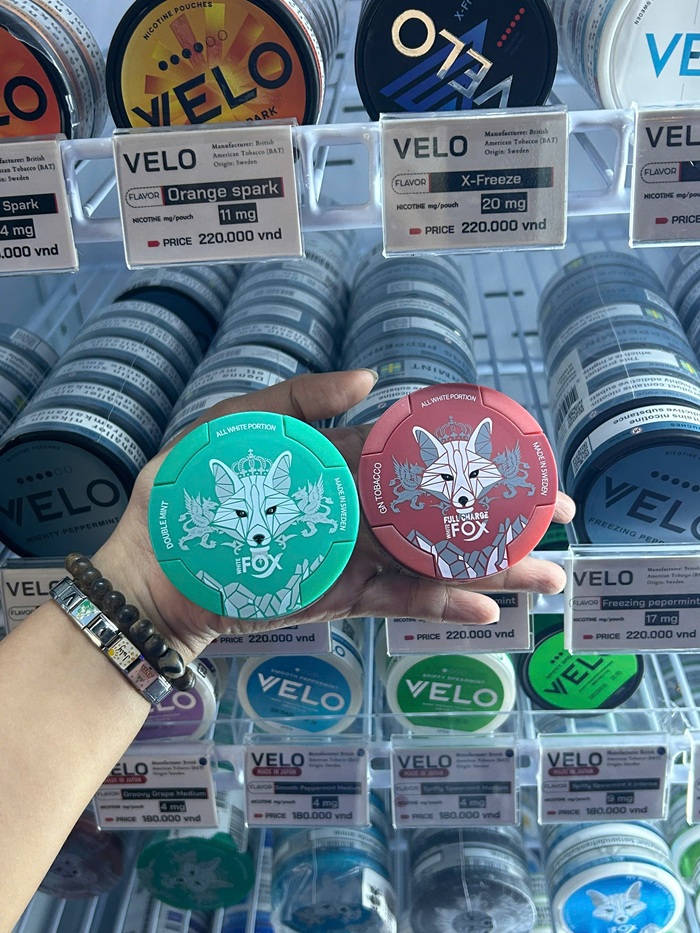
Traditional snus contains tobacco and is commonly kept cold throughout distribution. Swedish Match recommends cold storage for the best shelf life, while guidance for Swedish snus frequently refers to a temperature of approximately 4–8°C.
At home, place the can in a stable area of the refrigerator rather than in the door, where temperatures change more frequently. Keep the lid closed to limit moisture loss and prevent the product from absorbing food odours.
Remove only the pouch required and close the lid immediately. Do not leave the can open on a table for extended periods. Never mix used pouches with fresh ones or place food and foreign materials inside the can.
Some tobacco-containing snus can be frozen for longer storage, but the manufacturer’s guidance should be checked first. When freezing is permitted:
Freezing is not a rule for every product. Formulas and packaging differ. If the label does not mention freezing or the manufacturer does not recommend it, follow the conditions printed on the can.
Products in the nicotine pouches collection contain no tobacco leaf. Official ZYN and VELO guidance generally emphasises three points: keep the pouches in their original container, close the lid and choose a cool, dry place away from sunlight and heat.
A closed cupboard or drawer in a cool room is usually suitable. ZYN UK recommends a stable range of 15–25°C, while VELO guidance in some markets states that high temperatures and excessive humidity should be avoided. Because specifications can vary, the figure printed on the package remains the primary reference.
In a hot climate such as Da Nang, “room temperature” does not mean every indoor location. Avoid windowsills, kitchens, areas beside heat-producing appliances, vehicle storage compartments and cars parked outside.
Most nicotine pouches do not require refrigeration. Some VELO guidance allows refrigerator storage when the can is sealed and protected from moisture. If a home remains consistently hot, a refrigerator may offer a cool environment, but condensation should be controlled:
For product-specific information, compare the VELO and ZYN ranges, then give priority to the instructions on the physical can.
Simple habit: Write the opening date on the base or side of the can. This makes it easier to track an opened product without relying on dryness or smell.
Look for wording such as Best before, Best if used by, a manufacturing date or a date code on the base of the can. Date formats vary by market, so check whether the label uses day/month/year or month/day/year.
A best-before date normally relates to the period during which the manufacturer expects the product to maintain quality when stored correctly. It does not guarantee quality after a can has been opened, punctured, left in a hot vehicle or exposed to excessive humidity.
There is no single opened-can lifetime that applies to every snus or nicotine pouch. The package and official instructions for the exact product take priority over a general rule.
Do not use the product if:
A drier pouch may indicate lost quality, but do not spray it with water or add flavouring or any other substance. Rehydrating pouches can introduce contaminants and removes control over their original storage conditions.
Cross-border rules for snus vary. Keeping the original package does not replace declaration duties, quantity limits or import restrictions.
Nicotine safety: Nicotine is addictive and can cause poisoning if swallowed by a child or pet. Lock products away or store them where they cannot be accessed. If accidental ingestion or unusual exposure occurs, do not wait for symptoms; contact a medical service or poison centre in your location immediately.
Tobacco-containing snus is commonly refrigerated to maintain moisture, flavour and quality until its best-before date. Check the label because the exact storage temperature can differ by product.
Usually not. Many manufacturers recommend the closed original can, a cool and dry location, and protection from excessive heat. Some products may be refrigerated if the container is sealed against moisture, but the package instructions should take priority.
Some tobacco-containing snus can be frozen for longer storage when the manufacturer permits it. Use airtight protection, thaw gradually and avoid repeated freezing. Nicotine pouches generally do not need to be frozen.
Fika Pouches does not recommend using a product past its date or when its storage history is unknown. Flavour, moisture and overall quality may have changed. Discard any can that is damaged or contains torn, mouldy or unusually smelling pouches, regardless of the printed date.
No. Adding water, flavouring or another substance can introduce contamination and alter the product. Replace the can and correct the lid-closing or storage conditions.
It should not be, especially in a hot climate. The temperature inside a parked car or storage compartment can rise beyond the manufacturer’s recommended range.
Yes. A closed can still contains nicotine and may be opened, bitten or swallowed. Store it in a locked cupboard or another completely inaccessible location.
This article is for general information. The instructions on the exact package and the manufacturer’s product-specific guidance should take priority.
Check the product before storing it: Browse the nicotine pouches collection or read more in the snus and nicotine pouch knowledge centre. Keep products in their original cans and follow the storage conditions printed on the label.
Usually replies within minutes.